

Periodontal Therapy for Gum Disease
If your gums bleed when you brush, or someone told you that you need a deep cleaning, this is the treatment they meant. We numb the area and clean the root surfaces below the gumline, where a regular cleaning stops.
Book an AppointmentWhat is periodontal therapy?
Plaque hardens into tartar. Above the gumline, we polish it off at a routine visit. Below the gumline it sits on the root, inside a pocket between the tooth and the gum, where a toothbrush cannot reach and a routine cleaning does not go. The bacteria stay. The pocket deepens. Over time the bone holding the tooth pulls back.
What to expect with periodontal therapy
Comfort
You are numb before anything starts. Expect pressure and water, not sharpness. If a spot wakes up partway through, tell us and we add more anesthetic.
Time
Longer than a routine cleaning. We treat one side of the mouth per visit, so plan on two appointments and a shorter recheck after.
After
Gums are sore for a day or two, and teeth can stay sensitive to cold for a few weeks. Over-the-counter pain relief handles it for most people.
Insurance
Most PPO plans pay part of scaling and root planing when the pocket readings and X-rays support it. We check your benefits and quote your share first.
Healthy Smiles Are Possible
Measuring the pockets
We walk a small probe around each tooth and read the depth in millimeters. Those numbers, next to your X-rays, show which areas need treatment and how deep the problem goes.
Numbing the area
Local anesthetic goes in first, on the side we are treating that day. Nothing else starts until the area is fully numb, which takes a few minutes.
Cleaning below the gumline
An ultrasonic scaler and hand instruments clear tartar and bacteria off the root surfaces inside each pocket. The root is then smoothed so the gum can reattach to it.
Aftercare and recheck
We rinse out the pockets, go over how to keep the area clean while it heals, and book the other side. The recheck comes four to six weeks later.
What scaling and root planing does
Scaling lifts the hardened deposits off the root, below the gum. Root planing smooths what is left so the tissue can tighten back against the tooth and bacteria have less to grip. The area is numb for all of it, and we work on one side of the mouth at a visit. Most people describe pressure and vibration rather than pain.
After the pockets are clean
Gum disease is controlled rather than cured. Once the pockets are clean, the work is keeping them that way. We bring you back after the tissue has had time to heal, measure the same pockets again, and compare the numbers with the chart from your first visit. From there most people move to a cleaning every three or four months instead of every six.
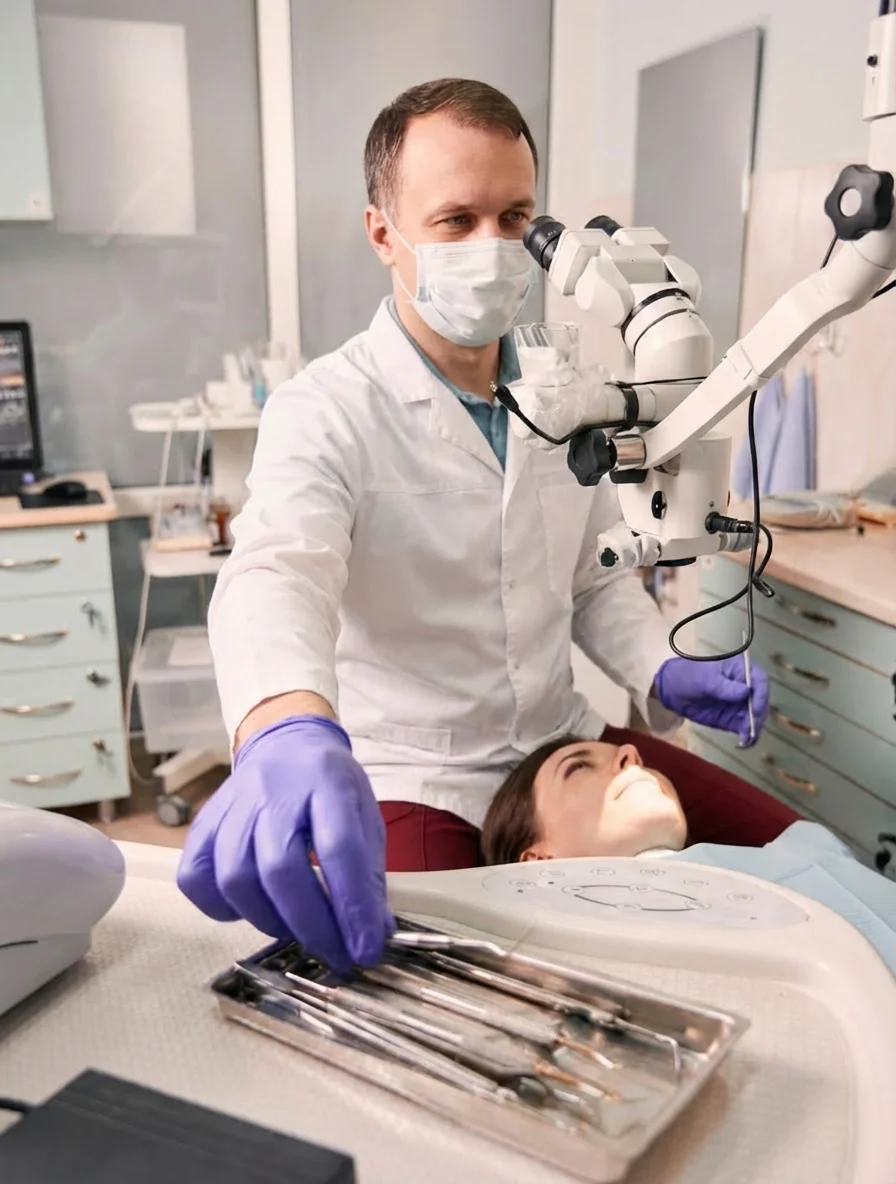
Dr. Ion Rotaru, DMD
Dr. Rotaru holds degrees in biomedical sciences and in dental medicine. He is from Moldova and moved to the United States to practice dentistry. His work is general dentistry, which covers most of what a person needs over a lifetime: checkups and cleanings, fillings, crowns, root canals, and the ordinary repairs in between.
He is fluent in English, Romanian, and Russian, and sees patients in all three languages. His approach starts with the person rather than the chart: what is bothering you, what you have been putting off, what you can manage right now. He would rather spend an extra ten minutes explaining than have you agree to something you do not understand.
- Years of Experience
- 9+Years of Experience
- Happy Patients
- 1,000+Happy Patients
Other Dental Services
Testimonials
What Patients Are Saying
Real stories from real patients who trusted us with their smiles.

Well, let's be honest. I don't know anyone who actually likes having dental work done. But if you are in need I highly recommend Dr Rotaru. He saw me for the first time after my friend and dentist Angel Lopez retired. And it was under an emergency situation. I had cracked a tooth and was in a lot of pain. He saw me on the same day and explained he would be in and out of the room as he worked me in. He is professional but kind. Understanding, respectful and listens. I am very grateful and have found my new Dentist.
Debi R.
Patient

Dr. Ion Rotaru just performed a root canal. He is compassionate, professional, and caring. He explained the entire process as he went along. That brought peace to me. I love he's my new dentist. Thank you Dr Angel Lopez for taking care of your patients until your very last day! You served the Tampa bay community for very long. May you and Betsy enjoy your retirement.
Josie S.
Patient
Dr. Rotaru was very professional and explained the procedure step by step as he was going along. He was attentive in asking if I had any discomfort as the procedure went along. He explained what I would expect and feel after the procedure. Everything went smooth and painless. Thank you so much.
Miguel P.
Patient
The dentist I had been seeing for 20 years retired. Dr Rotaru and staff were excellent and made the transition feel seamless. What a relief! Highly recommend this practice.
Susan B.
Patient
FAQ
Frequently Asked Questions
You are numb for it, so the cleaning itself should not hurt. The injection is the part most people notice. Afterward the gums feel bruised for a day or two. If numbing has been difficult for you in the past, tell us before we start.